Honda Parasitic Battery Drain
This is a story about a Honda Civic with a parasitic battery drain that would deplete the battery to below eight volts in about two days. That’s a massive drain!
Attempts by other workshops to fix the problem were ineffective — real shot in the dark stuff to be honest — including installing a larger battery, randomly disconnecting lights and other accessories, and disconnecting the battery when the car was left idle for an extended period. And showing the customer how to do this so they could still use the car (insert rolling eyes emoji)
Oddly, no one performed a parasitic drain test with an ammeter to pinpoint the faulty component.
Initial Testing
The first step was to verify the customer’s complaint. I carried out a health check on the battery, which it passed – it was new. Then I checked the draw using a clamp meter to see what level of current I was dealing with. This isn’t the most accurate test, but it told me the size of the draw.
The draw on the battery was around 300 mA, which is quite substantial and should be easy enough to find. But as I continue testing, I noticed that the draw was intermittent. That can make it a little trickier — and maybe why previous attempts were unsuccessful.
Getting some real readings
At this point I connected an inline ammeter on the positive battery terminal. I used the Snap-On Vantage Pro because it has an amp graph — which I like — and it has a mini 10A blade fuse in case I turn the ignition on or whatever and pull too many amps — it’s easier to change this fuse than on other tools I own so I like the set up.
I noticed the 300 mA draw would come and go, so using a graphing meter can be helpful to show a full trace and if there’s a rhythm to the on/off or is it just a fault with no repetition. This method also allows me to lengthen the timebase and see what’s happening over a long period.
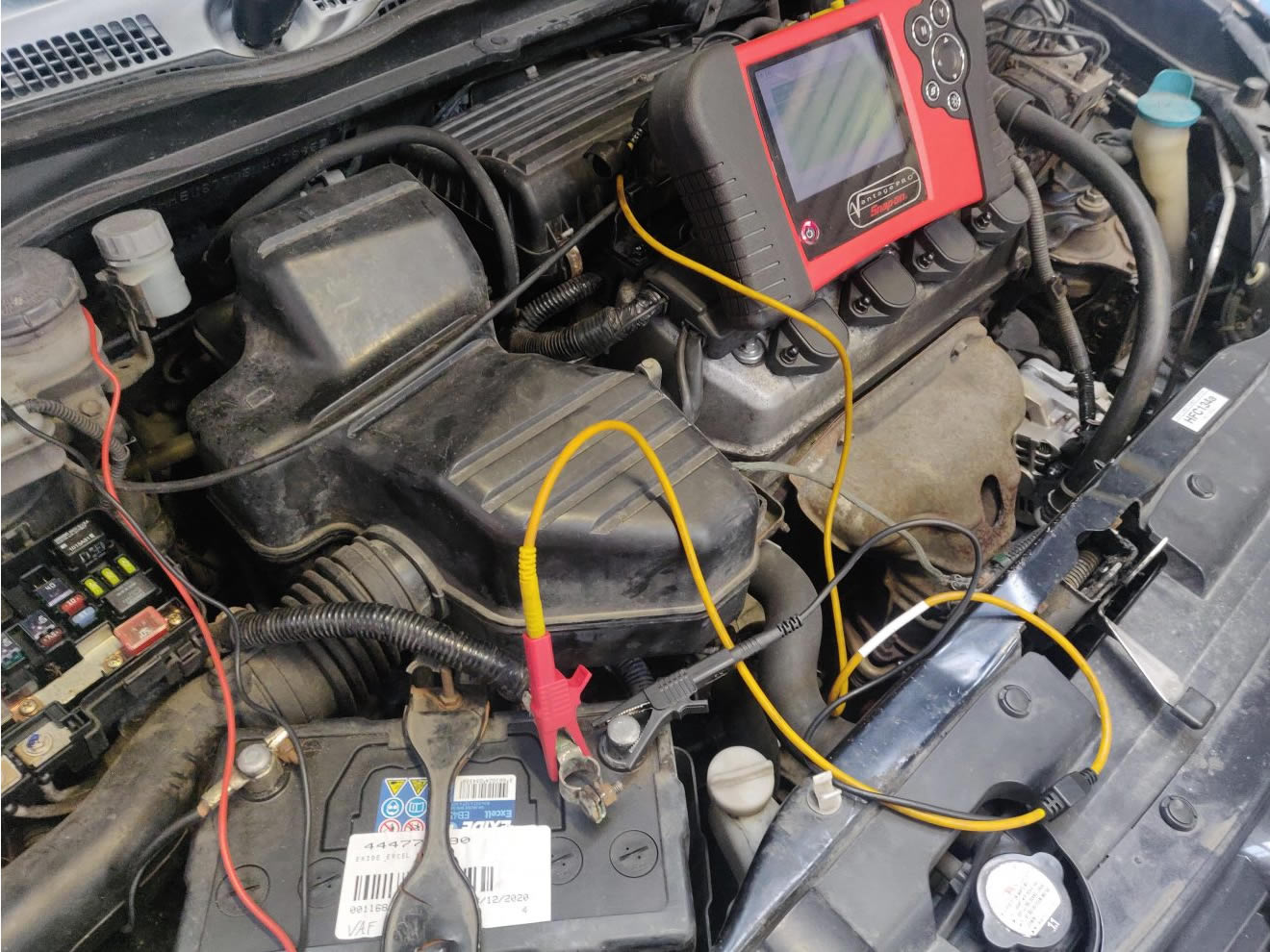
What I do in this situation is latch all doors — this is easily done with a screwdriver, or similar, pushed into the lock to simulate it closing and latching — now I can open them without waking anything up, like interior lights or fuel pump primes, etc.
This gives me the ability to access interior fuse boxes or other electrical components I may need to get to for testing purposes.
Finding the faulty circuit
With everything in place I can test the circuits for a culprit. I sometimes do this with an Amp Hound or with a normal Multimeter. The Amp Hound is a quick way of doing it usually — but I have had times were small draws were not seen — in this case with a larger draw I was sure it would work just fine.
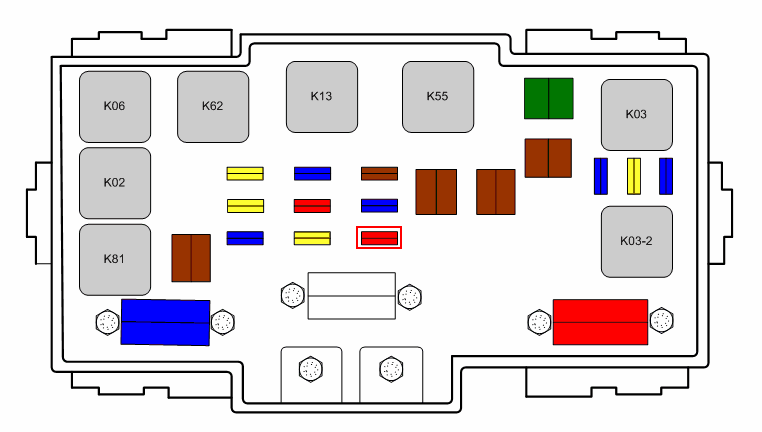
It ended up taking a lot longer than it should as I noticed the draw would drop off quite frequently — which was frustrating — but eventually I pinned down a suspect circuit.
Now to find the cause
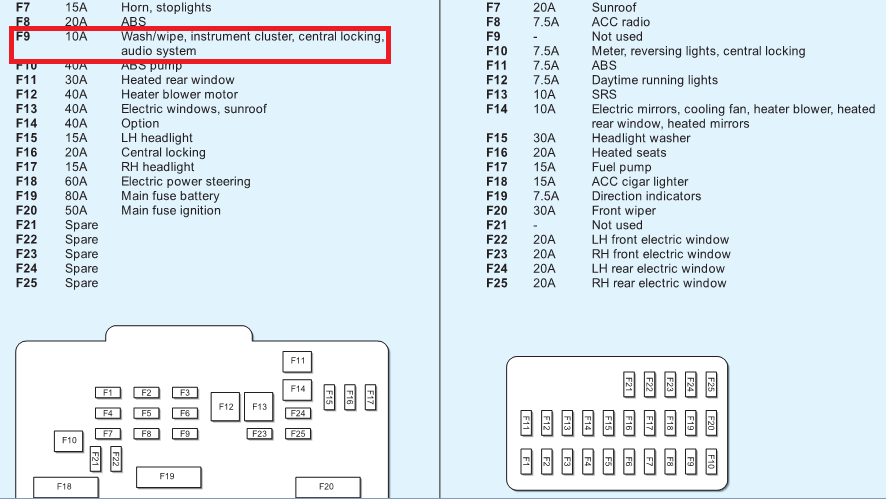
The draw on the battery is coming from Fuse 9 (F9) in the engine compartment fusebox. This is a 10 A fuse for Wash/wipe, Instrument cluster, central locking and audio system circuits.
When I first looked at this car I expected to see an aftermarket radio/head-unit — I’ve fixed so many battery drains by removing these units — but that’s not the problem here, the original factory unit is still in place.
Although not the case here, one lesson I’ve learned after years of chasing battery drains; the most common causes are aftermarket junk.
I’m at the point now where I have to make a decision and take something out of that circuit to see if the draw goes away.
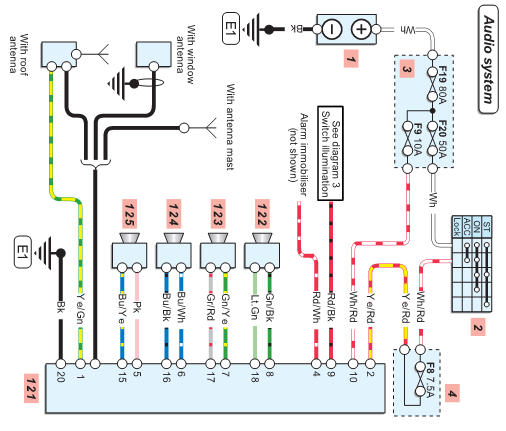
The easiest to disconnect — and frankly the biggest suspect — is the audio head unit. It’s a bit of work as part of the dash trim had to be removed but it’s the most straightforward of the options.
Sure enough when I get it disconnected the draw disappears straight away. I’m excited and happy for this but there is an element of doubt, because the drain did go away and come back while I was testing earlier.
I left it overnight with my graphing meter connected on a really long timebase, when I came in the next day, the battery had maintained its charge and the graphing meter showed no signs of drains.
Conclusion and wrap up
On one hand I wasn’t surprised at the outcome — I’ve seen this before — and although I did find that it was (slightly) intermittent and not straightforward to find. It could have been found by the previous places if they just looked properly.
But they made assumptions as to what it could be, spent money on a battery that probably wasn’t needed — I don’t know how old that battery was and maybe it needed replacement for testing purposes, that is a reasonable thing to do — but just unknowingly unplugging this or that and then telling the customer to disconnect the battery overnight as a solution is, frankly, ridiculous.
Leave a Reply
You must be logged in to post a comment.