Link: VW Caddy 2.0 TDI: Intermittent No-Start & Loss of Terminal 15 Power
August 25, 2026
https://smauto.net/vw-caddy-2-0-tdi-intermittent-no-start-loss-of-terminal-15-power/
The weblog for manrs.autos
https://smauto.net/vw-caddy-2-0-tdi-intermittent-no-start-loss-of-terminal-15-power/

Oh yeah, one of those RAM OOSI’s. Nice. #ram #dodge #ram1500
Volkswagen Jetta 1.6 BSE 2006
This car failed the emissions test for the NCT in Ireland, and the workshop charged with its repair is stumped. Emissions seems to be a stumbling block for a lot of workshops, and I’m really not sure why.
One reason might be that too many techs try to fix them by ringing someone looking for a silver-bullet answer rather than working through a process. That’s how I came across this job — I got the call.

I don’t mind taking calls like this. In fact, solving complex issues forms the majority of my work, and I thoroughly enjoy it. I like the puzzle, the research, and the challenge. While I can’t give away diagnostic work for free — it’s my livelihood, after all — I’m really happy to talk to other mechanics and try to help them sort out issues. It forms good connections, and it’s good for business in the long run.
What stood out to me on this one was the lack of process. Up to the point of calling me, the extent of the repair effort was clearing the MIL twice right before the test in a sloppy attempt to “get it through.” When I asked basic questions about fuel trims or O2 sensor activity, I was met with complete silence — suggesting live data wasn’t even being evaluated.
The image above is from the fail report sheet after its NCT visit. It shows an incredibly rich running condition both at idle and high idle. So what could be wrong here?
First things first: What can cause a rich condition? Broadly speaking, it’s too much fuel, too little air, or fuel vapours unceremoniously entering the intake system.
What if the ECT sensor were faulty? It could be reading -40°C and flooding this engine out.
Another reason — and why I asked what the trims and O2 readings were — is that it could simply be a dead or unresponsive sensor causing the ECU to default rich.
For that matter, it could be as simple as a heavily restricted air filter choking the intake.
I also considered leaking injectors, high fuel pressure, or a heavily worn engine with excess blow-by making its way into the breather system.
Being thousands of miles away and not having hands on the car makes it trickier, but asking the right diagnostic questions usually points you in the direction of logic and data.
Before I could even sink my teeth into a deep dive, one simple question shifted the entire picture: When did it last have an oil change?
A few umms, ahhs, and a quick phone call to the owner revealed the answer: a staggering five years ago.
Yes, you read that right. Five years of unburnt fuel, moisture, and heavy blow-by sitting in the oil, constantly being pulled straight back into the intake through the PCV system and saturating the mixture.
To borrow a phrase from many a mechanic before me: “Well, there’s your problem.“
I’m still awaiting the call back to confirm after they flush it, change the oil and filter, and run it. But given how these calls usually go once the obvious hits… I won’t be holding my breath for a follow-up.
Besides, I know they don’t have a gas analyser so even when this is repaired the real result will only be verified by another visit to the test center.
Sometime around 1995 I bought an oscilloscope for my workshop. There was one in the college I went to, a Crypton I think, but I don’t have a memory of it being used. And if it was, it was a very brief introduction.
I finished my college time in the summer of 1992 and then worked trying to find my place in the motor trade. I enjoyed getting stuck into problems and working them out. The more I got into this the more equipment I needed, and to be honest I really couldn’t afford what I wanted.
It was some time in 1993 I was visiting another workshop locally to me and I noticed a machine he had just gotten secondhand. It was the same one we used in the Citroën main dealer where I worked, it was a Souriau which was the brand supplied to dealerships at the time.
It had a three gas analyser fixed in the middle of the frame with an oscilloscope CRT screen on top and a boom for the cables and timing light attached to the back.
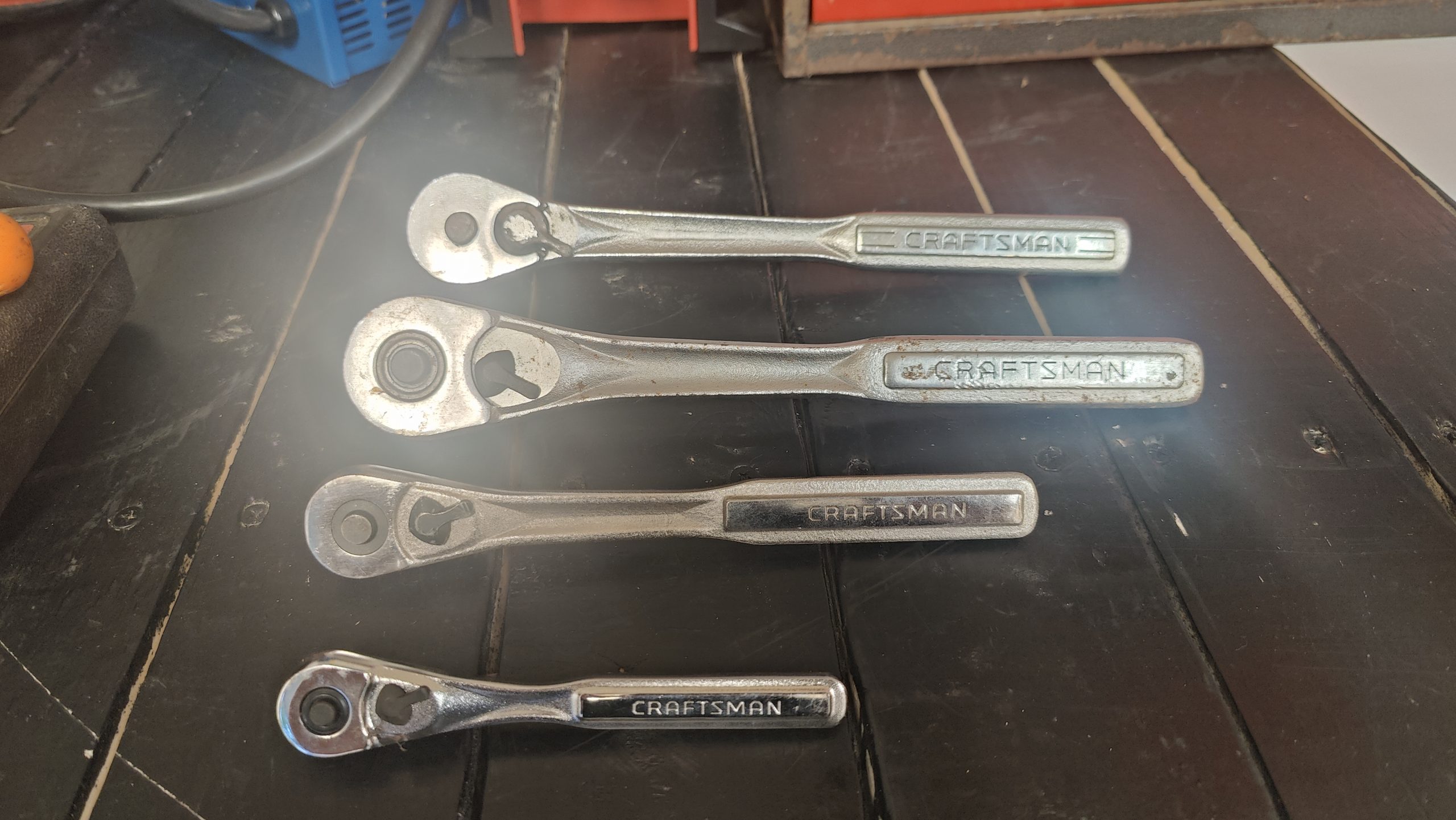
(more…)Some old Craftsman Ratchets from a recent rummage sale toolbox collection I bought. Still going through them. A.I. says I really hit the jackpot here. I love how it’s always so positive and upbeat 😂
Are we even allowed to say Scr**driver anymore?
I watch a lot of — well way too much in fact — YouTube videos and I notice the oddest and sometimes most inoffensive words are muted.
So imagine getting your hands on this tool as a marketing company and trying to get the message out there that it’s a double handed errrr some sorta jobby screwdriver thingy.
But anyway here it is, my latest tool thrift find. Which seems to becoming a thing without me even trying to make it a thing.
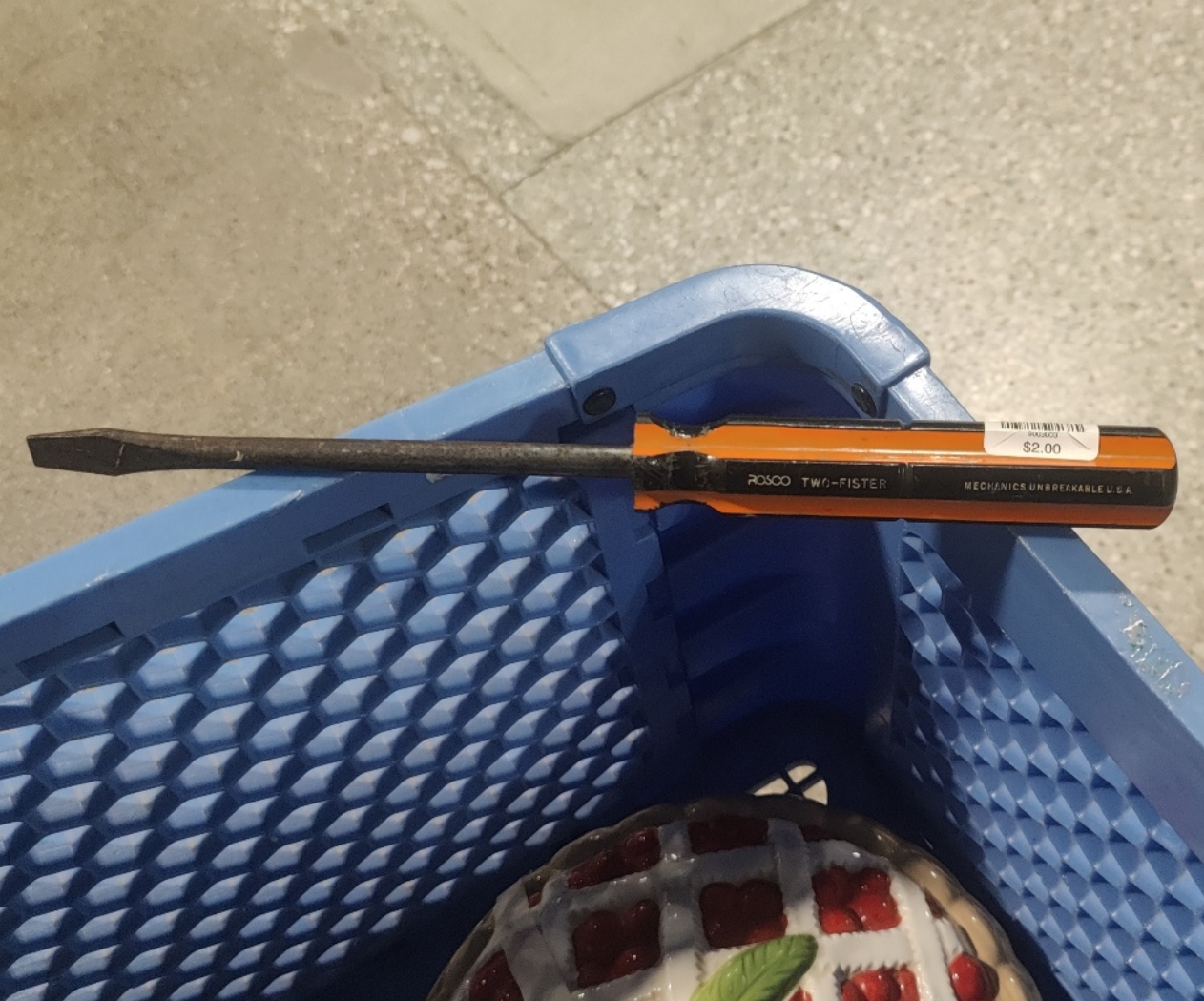
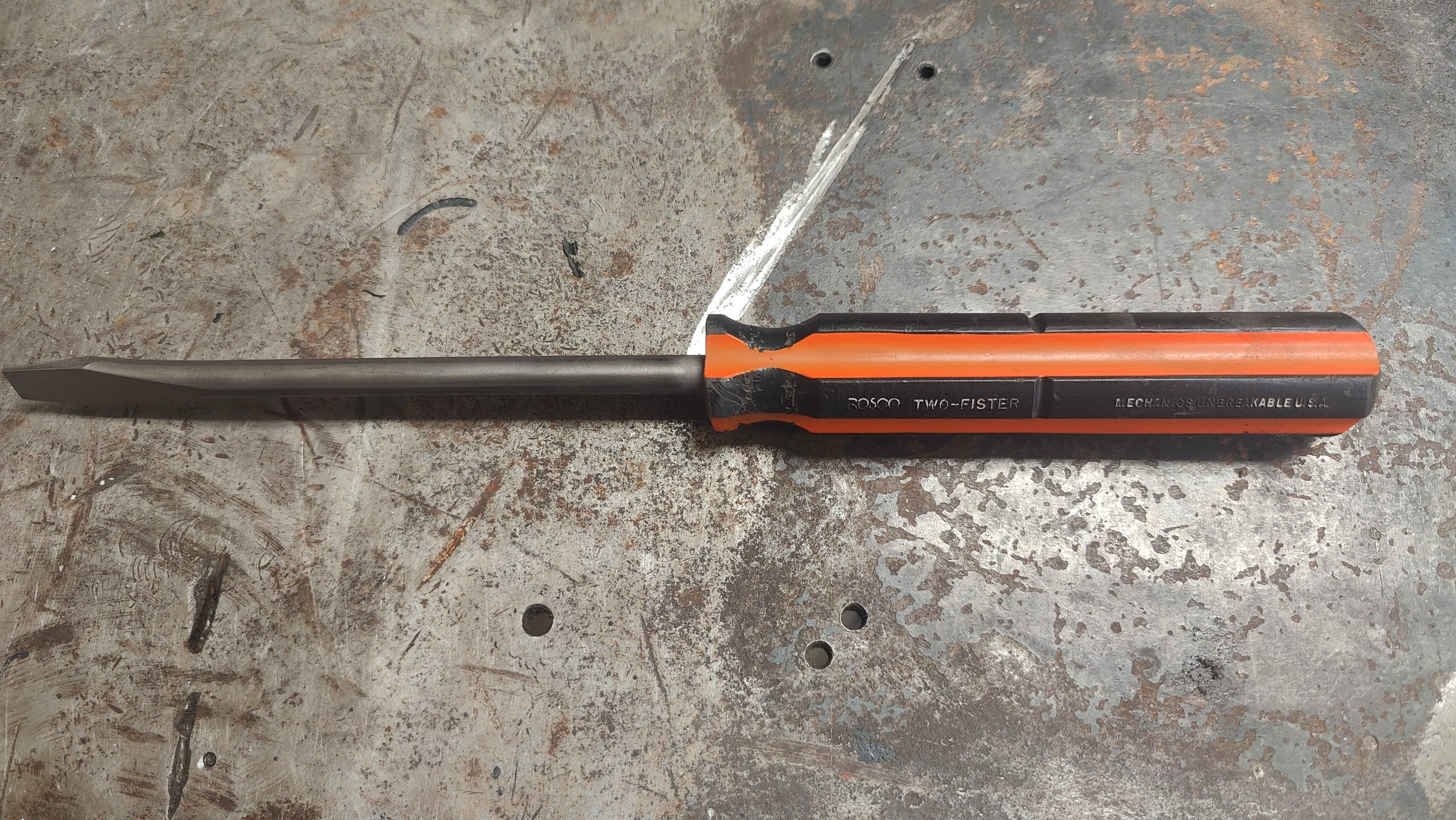
The tool in [image] is a vintage Rosco “Two-Fister” Mechanics Unbreakable flathead screwdriver. Rosco was a classic American tool brand (often associated with Rosenberg Bros. & Co. out of New York), and they made these rugged, thick-handled drivers back when tools were built to outlive their owners.
Google Gemini
I had never seen one or even heard of one before so it was a great find for the research alone. Now all cleaned up it’ll live in the toolbox for whatever adventure comes my way in the workshop.
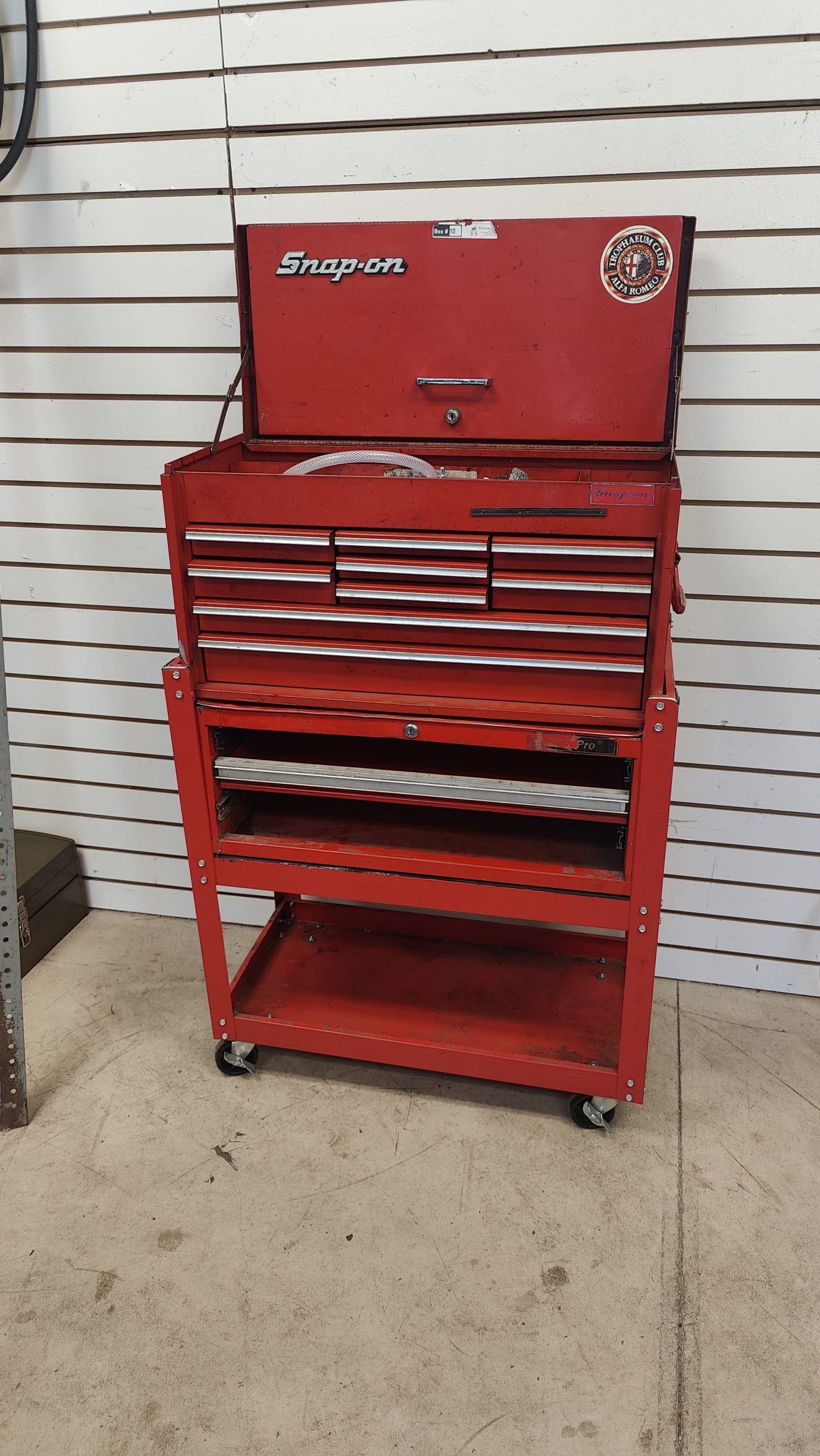
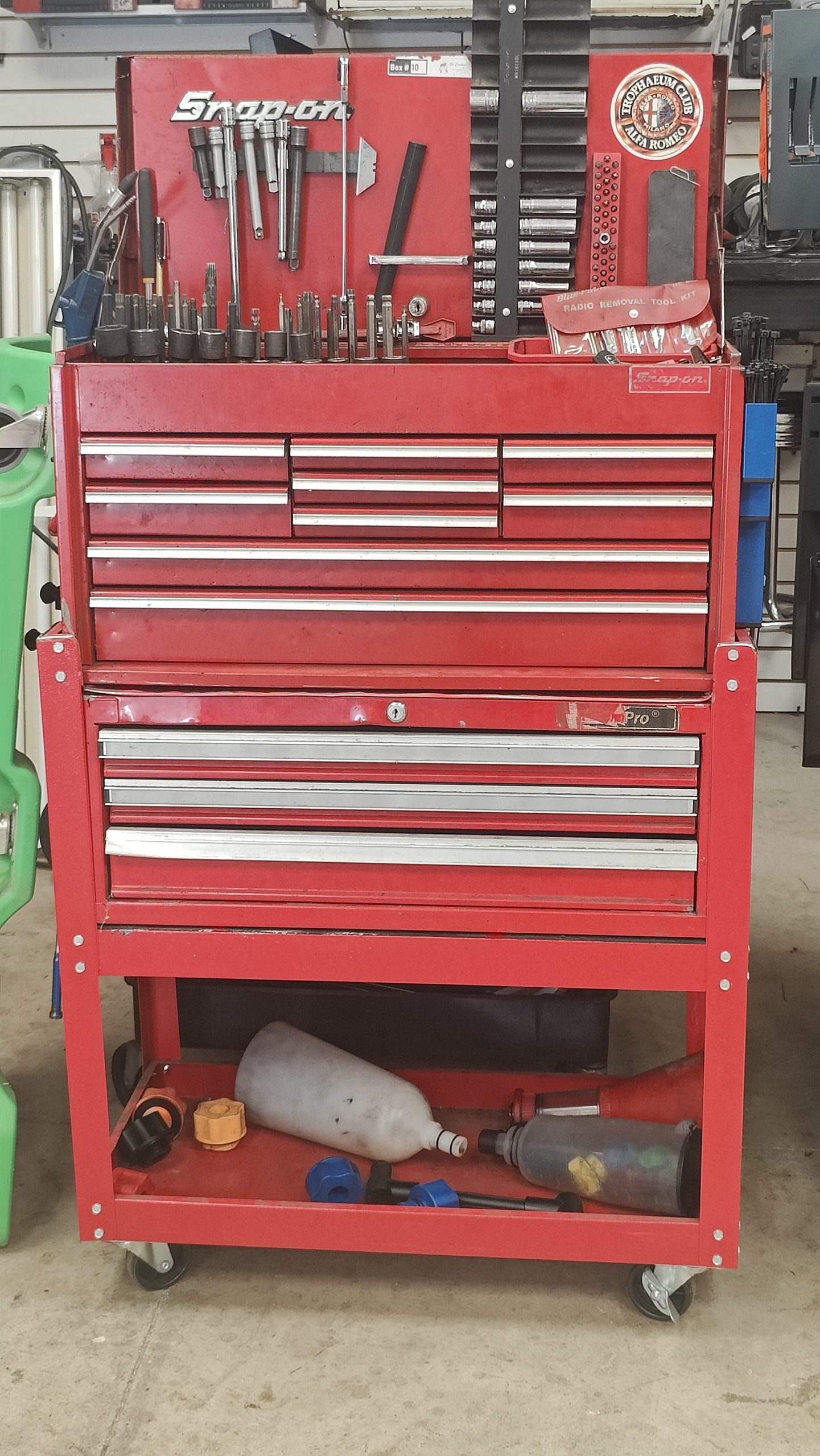
I cobbled this together today from my original snap on top chest — a KRA-59G I bought in 1989 — a crappy set of 3 drawers I picked up somewhere for free years ago and a cheap metal cart which I adapted to use in my move.
It’s actually two carts made into one, now it’s chopped and drilled to make a service cart of sorts.
It’s a little rough but working with what I had I think it works and looks just fine.
**Added the image below, it’s actually working out nice as a service type cart.

Hey you might not be able to afford a Rubicon or a classic CJ, but in Ohio we don’t let that shit bother us. No sir. You go down the local recyclers grab whatever the hell car they have that still starts, get a temp tag, remove the doors and live that sweet Jeep life!
Rooting through a salvage yard can turn up all kinds of treasures — and a lot of junk quite honestly — but this time I did find something interesting; Ford service books from 1954 with some great information about engines and service from that era.
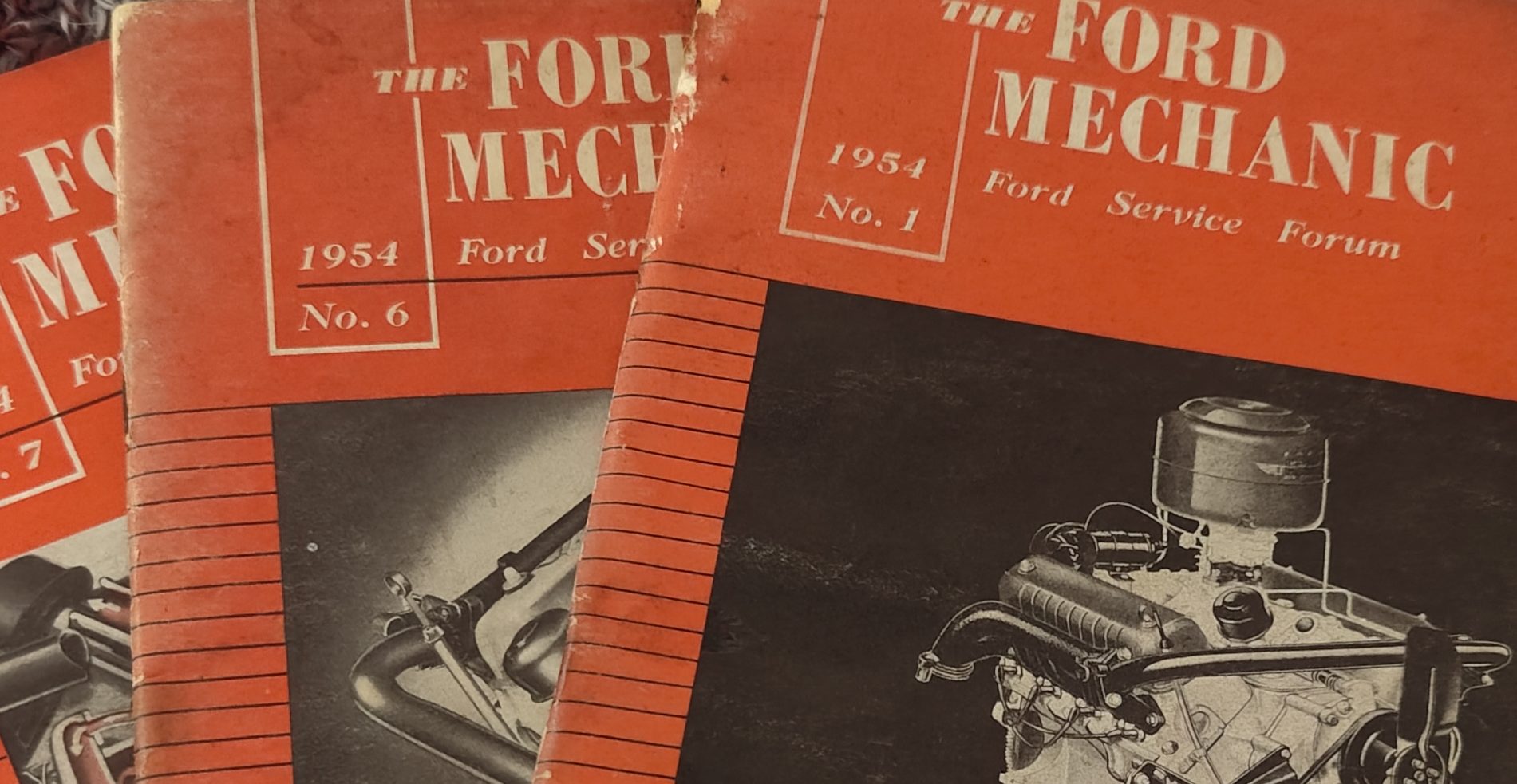
Flicking through the first one I found a great section discussing Volumetric Efficiency.
(more…)I’m a big fan of the Parker Jotter, always have been, it’s probably the most practical and yet elegant pen ever made — my opinion — I’ve owned and lost hundreds of them in my lifetime.
I’ve even bought some newer versions of it but always came back to the original incarnation. Nothing weird there so far, I guess..
But when I first heard of the Fisher Space Pen I was hooked and had to get one. It was then I noticed something great. Something that I did not know. When I bought my first Fisher Space Pen refill it came with a little plastic topper. My mind was blown; this was to convert your Parker Jotter to a Space Pen in seconds.
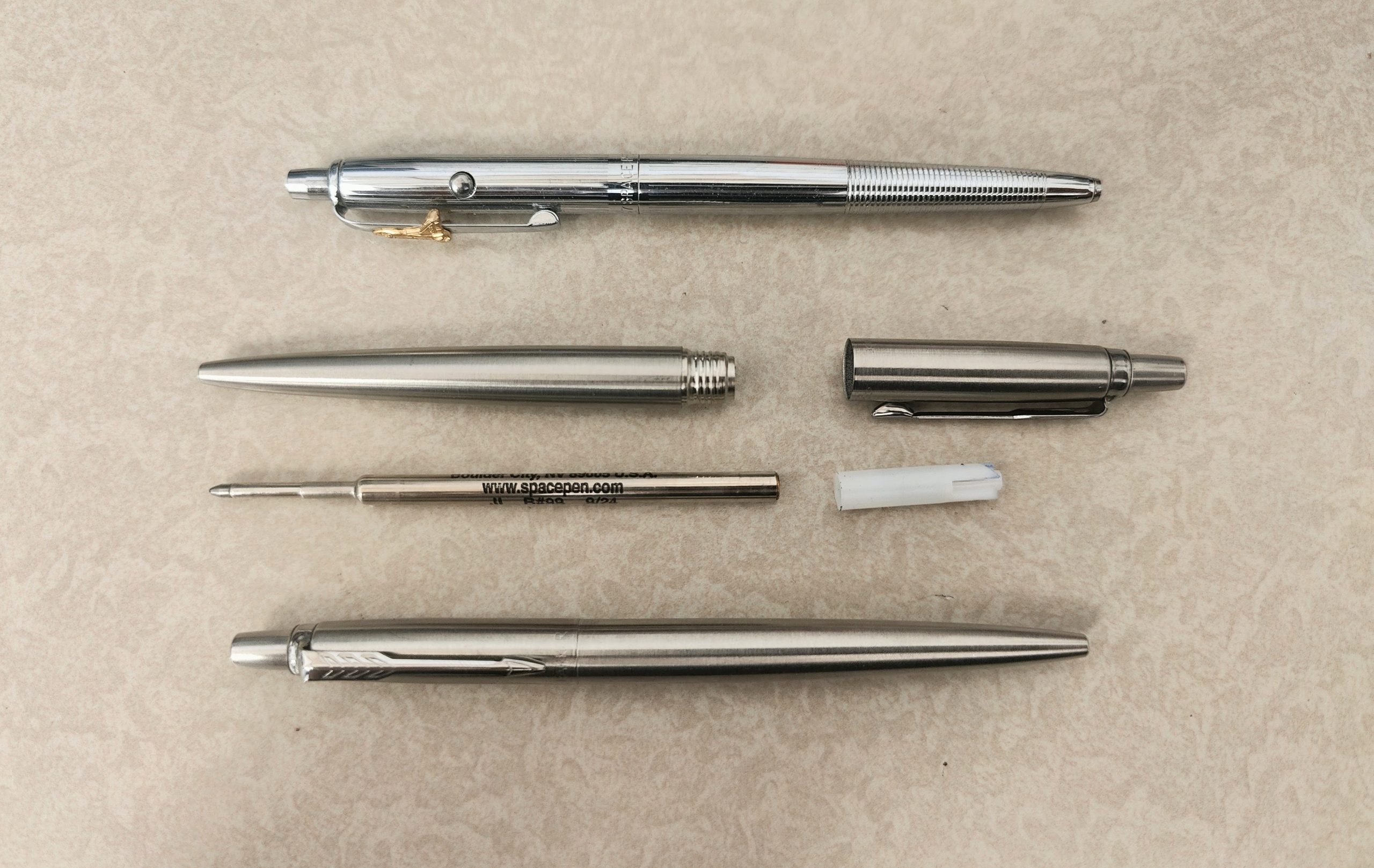
Pop on that plastic piece which is shaped just like the Parker refill for the ultimate Space Pen experience in your favourite Parker Jotter. Who knew!? Who didn’t know!? And do many people even care?
But anytime I tell someone this — and I pick and choose the person I tell, it must be someone who’d be interested in design and/or engineering — their mind is blown too.
© Simon Manley is proudly powered by WordPress
Entries (RSS) and Comments (RSS).